
IASON + BSB00174
Invasive Alien Species Observatory and Network Development for the Assessment of Climate Change Impacts and Contextual Ecosystem Services Evaluation in Black Sea Deltaic Protected Areas
ACRONYM: IASON+
The project is funded by the European Union through the Interreg VI-B mechanism, the Next Black Sea Basin Programme. The value of the contract is €1,396,112.46.
Contract period: 28.06.2024 – 27.12.2026
Project priority
Programme priority
02 – Clean and Green Region
Specific objective
RSO2.4 – Promoting climate change adaptation and disaster risk prevention, resilience, taking into account eco-system based approaches.
THE GENERAL OBJECTIVE OF THE IASON+ project – to continue the activities of establishing and carrying out joint actions for monitoring Invasive Alien Species (IAS), to assess their influence in defining Ecosystem Services (ES) in deltaic ecosystems in the Black Sea Basin, in five countries (Romania, Ukraine, Greece, Turkey and Georgia) and to assess resilience in current and forecasted climatic conditions, to create and promote the premises for adaptation to climate change.
SPECIFIC OBJECTIVE OF THE IASON+ PROJECT: Continuing, developing and implementing common procedures for monitoring and assessing risks to invasive alien species (IAS), assessing their influence in defining ecosystem services (ES) in deltaic ecosystems in the Black Sea Basin (BSM) and assessing resilience in current and forecasted climate conditions, in order to create and promote climate change adaptation premises in the protected areas of the project, in line with regional strategies and policies, targeting, motivating and assisting countries in the creation of IAS inventories, based on long-term cross-border collaboration, information and research capacity through access to and use of innovative technologies on IAS monitoring and their influence on SE, improving cooperation through the involvement of stakeholders at different levels of the project.
PROJECT PARTNERS:
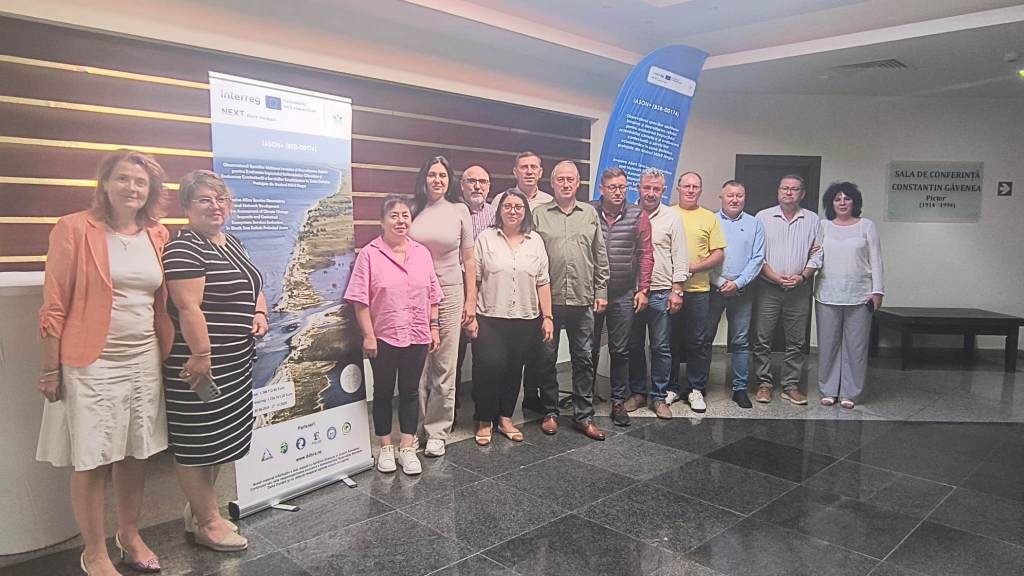
Consortium Leader – Danube Delta National Institute for Research and Development, (DDNI) – Romania
Project Partner 2 – Danube Delta Biosphere Reserve Authority (ARBDD) – Romania
Project Partner 3 – Institute of Marine Biology of the National Academy of Science of Ukraine (IMB) – Ukraine
Project Partner 4 – Democritus University of Thrace (DUTH) – Greece
Project Partner 5 – Karadeniz Technical University – Marine Sciences Faculty (KTU-MSF) – Republic of Türkiye
Project Partner 6 – International Business and Economic Development Center (IBEDC) – Georgia
CHALLENGES THAT INSPIRED IASON+
One of the central challenges addressed by IASON+ is the need to evaluate the Invasive Alien Species (IAS), which are a major driver of biodiversity degradation across the Black Sea. Understanding their impacts requires analytical approaches capable of tracking changes in species distribution, ecosystem interactions, and long term ecological responses. At the same time, IASON+ focuses on evaluating Ecosystem Services (ES), which provide a range of benefits to the Black Sea region: food and water, flood and disease regulation, nutrient cycling, and cultural heritage and recreation. Many of these benefits are currently at risk due to ongoing destruction and degradation. In addition, competing land use demands and climate effects are also simultaneously pressuring the region. Strengthened science policy interfaces, integrated land use planning, and climate adaptation are essential to sustain ES and support effective management strategies.
Focusing on five delta areas, the Danube Delta (Romania/Ukraine), Nestos Delta & Lake Vistonida (Greece), Kızılırmak Delta (Türkiye) and Chorokhi Delta & Kolkheti National Park (Georgia), IASON+ contributes to a clearer understanding of ecosystem trends and provides a scientific basis for coordinated regional policies on IAS and ES under changing climatic conditions.
WHAT MAKES IASON+ INNOVATIVE AND UNIQUE
IASON+ stands out for its integrated approach, combining IAS monitoring, ES assessment and climate risk evaluation within a single operational framework. This enables more comprehensive insights into ecosystem change than traditional single focus monitoring programmes. IASON+ promotes the use of advanced modelling and analytical tools, supports consistent data exchange among partner countries, and strengthens regional research capacity. By aligning with the environmental objectives of the CMA (Common Maritime Agenda) IASON+ enhances the region’s ability to plan for sustainable and resilient blue economy development.
PROJECT RESULTS:
IASON+ Project aims to tackle the identified common challenges regarding the influence of IAS on ES through innovative approaches and solutions. There are some ways the project approach goes beyond existing practices and the solutions that can be developed, adopted, and implemented during the IASON+ Project lifetime:
Enhanced Monitoring and Early Warning System: the project will develop an advanced monitoring system that combines remote sensing, citizen science, and traditional surveillance methods. This approach will provide real-time data on the presence and spread of IAS, enabling early detection and rapid response actions. The integration of innovative technologies and community participation goes beyond existing practices and enhances the effectiveness and timeliness of monitoring efforts.
Integrated Management Strategies: IASON+ Project will develop and implement integrated management strategies that consider the ecological, socio-economic, and policy dimensions of IAS management. These strategies will focus on prevention, interception, eradication, and restoration measures. The approach goes beyond existing practices by promoting a holistic and multi-disciplinary approach that addresses the root causes of IAS introductions and prioritizes ecosystem resilience.
Adaptive Management and Decision Support Tools: the project will develop adaptive management frameworks and decision support instruments to facilitate dynamic and evidence-based decision-making. These instruments will assist policymakers, land managers, and other stakeholders in assessing risks, evaluating management options, and adapting strategies in response to changing conditions. The incorporation of adaptive management principles and decision support instruments goes beyond traditional approaches and enhances the project’s ability to respond to emerging challenges and uncertainties.
Stakeholder Engagement and Capacity Building: the project will emphasize stakeholder engagement and capacity building activities to ensure a participatory and inclusive approach. Local communities, policymakers, scientists, and other relevant stakeholders will be actively involved in the project through workshops, training programs, and awareness campaigns. This approach goes beyond existing practices by fostering ownership, knowledge sharing, and collaboration, which are vital for sustained and effective IAS and ES management.
Transnational Collaboration and Knowledge Exchange: the project promotes transnational cooperation among participating countries, facilitating the exchange of knowledge, experiences, and expertise in IAS and ES management. This collaboration allows for the identification of common challenges, sharing of lessons learned, and joint development of solutions. The transnational approach goes beyond existing practices by harnessing the collective wisdom and resources of multiple countries, enabling a more comprehensive and effective response to the challenges of IAS in the Black Sea Basin deltaic regions.
By adopting these innovative approaches and implementing the described solutions, the project surpasses existing practices in the sector/programme area/participating countries. It introduces novel monitoring techniques, integrates multiple dimensions of IAS management, promotes adaptive decision-making, engages stakeholders, and facilitates transnational collaboration. These elements collectively enhance the project’s ability to tackle the identified challenges and contribute to sustainable ecosystem services in the deltaic regions of the Black Sea Basin.
CONTRIBUTION TO A SUSTAINABLE AND RESILIENT BLACK SEA AND THE CMA GOALS
IASON+ is supporting the priorities of the CMA (Common Maritime Agenda) by advancing coordinated environmental protection across the Black Sea, it contributes to integrated coastal and marine planning by embedding IAS concerns into wider management frameworks and strengthens scientific research and monitoring practices through transnational data collection and sharing. Furthermore, it enhances the region’s capacity to manage ecological pressures by engaging stakeholders through training, information exchange and awareness raising activities. In doing so, IASON+ reinforces cooperation among Black Sea countries and aligns with EU efforts to safeguard marine and coastal ecosystems.
NEXT STEPS AND REPLICABILITY
To maximise the impact and transferability of its outputs, IASON+ is developing a comprehensive communication and dissemination framework to ensure stakeholders can access and apply project findings. User friendly documentation, guidelines and digital tools are being prepared to support the adoption of methodologies in other regions. Training activities will equip local authorities, researchers and practitioners with the skills needed to use the project’s tools effectively. The consortium is also building partnerships with organisations facing similar challenges, encouraging the exchange of knowledge and experience beyond the project area. Open access to key tools and materials will further facilitate reuse, while ongoing monitoring of uptake and feedback will help refine resources and enhance long term applicability across the Black Sea region and beyond.




Facebook
Linkedin
Twitter